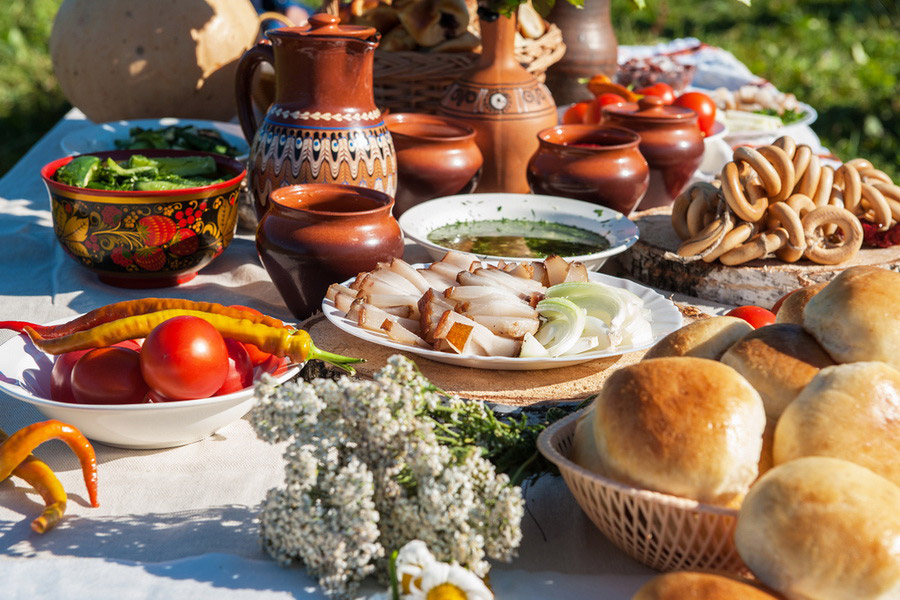
Russian holiday dishes: what is eaten in Russia on different holidays
Russia is famous for its gastronomic traditions, especially on holidays. Unlike many countries, where the festive feast is limited to Christmas or Thanksgiving, in Russia almost every important day is accompanied by special dishes. New Year's Eve, Easter, Shrovetide, Christmas - each holiday has its own traditions in food preparation, which are passed down from generation to generation.
About Astralion.
Astralion is a modern online Russian language school for foreigners, where learning takes place with native speakers. We offer individual and group lessons focused on live speech and practical application. Our convenient online platform allows you to study from anywhere in the world, and our methodology helps you not only learn the language, but also immerse yourself in Russian culture.
In this article, we will tell you what dishes are eaten in Russia on major holidays, when and why they became a tradition.
New Year is the main holiday of the year
New Year in Russia - everyone's favorite holiday, which is celebrated in the circle of family and friends. It is an evening when the table is literally bursting with dishes, because it is a tradition to set a rich feast and leave food for the night, so that there is always plenty in the house.
✔ Оливье - [Oliv'e] - Olivier is the main character of the holiday. It is made of boiled potatoes, carrots, eggs, green peas, sausage (or beef) and mayonnaise.
✔ Селедка под шубой - [Selyodka pod shuboj] - Herring under a fur coat — is a layered salad made of herring, potatoes, carrots, beets, eggs and mayonnaise. Yes, it seems strange, but you must try it, it's delicious!
✔ Холодец - [Holodec] - Kholodets is a traditional Russian dish, which is a meat jelly made of beef, pork or chicken. It is prepared in advance because it takes several hours to solidify in the refrigerator.
✔ Мандарины - [Mandariny] - Tangerines are an obligatory fruit of the New Year's table, which has been a tradition since Soviet times.
✔ Шампанское - [Shampanskoe] - Champagne - exactly at midnight, when the chimes strike, everyone raises their glasses and makes wishes.
After midnight, a night of movies, board games and festivities begins. And on January 1, everyone gathers to finish their New Year salads for breakfast, lunch and dinner.
Maslenitsa - pancake marathon before fasting
Maslenitsa is an ancient Slavic holiday symbolizing the end of winter and the arrival of spring. The whole week before Lent is dedicated to pancakes.
✔ Блины - [Bliny] - Crepe — are the main treat of Maslenitsa. They are baked with different fillings: sour cream, honey, jam, caviar, meat, mushrooms.
✔ Оладьи - [Olad'i] - Pancakes — small puffed pancakes, which are also often prepared on Maslenitsa.
✔ Сбитень - [Sbiten'] - Sbiten — a hot drink based on honey and spices, similar to mulled wine, but without alcohol.
Maslenitsa week ends with the burning of the effigy of winter, after which Lent begins.
Easter - kulichi, colored eggs and cottage curd pascha
Easter is the main Orthodox holiday, which symbolizes the resurrection of Christ. People prepare for it in advance, because it is preceded by a strict fast.
✔ Кулич - [Kulich] - Kulich is a tall sweet bread with candied fruits and glaze that is consecrated in church before Easter.
✔ Творожная пасха - [Tvorozhnaya paskha] - Curd pascha - a dessert made of cottage cheese, sugar, butter and raisins, which is laid out in the shape of a truncated pyramid.
✔ Крашеные яйца - [Krashenye yajca] - Colored eggs are a symbol of Easter. They are dyed in different colors, but the traditional color is red, as a symbol of life.
On Easter morning, everyone greets each other with the words „Христос Воскрес!“ и and has a festive breakfast.
May holidays - barbecues in the countryside
The first days of May in Russia are traditionally spent outdoors with shashliks.
✔ Шашлыки - [Shashlyki] - Shashliks are the main dish of the May weekend. It is cooked on coals, most often from pork, chicken or mutton.
✔ Овощи на гриле - [Ovoshchi na grile] - Grilled vegetables - baked tomatoes, peppers, eggplants, potatoes.
✔ Домашний квас - [Domashnij kvas] - Homemade kvass - a traditional Russian drink often taken at picnics.
These holidays are considered the unofficial start of the dacha season: people go out of town and relax in the fresh air.
Victory Day - front porridge and caravay
May 9 is one of the most significant holidays in Russia, dedicated to the victory in the Great Patriotic War. Parades, concerts and public festivities are held on this day.
✔ Фронтовая каша - [Frontovaya kasha] - Front porridge - buckwheat with stew, which is traditionally distributed on the streets to everyone.
✔ Каравай - [Karavaj] - Caravay - festive bread symbolizing respect for veterans.
✔ Гвоздики и конфеты - [Gvozdiki i konfety] - Carnations and candy - treats brought to veterans as a sign of gratitude.
Victory Day is a holiday of remembrance and pride celebrated by the whole country.
Birthday cake for the birthday person
Unlike other celebrations, on a birthday it doesn't matter what dishes are on the table, what matters is the cake for the birthday person.
Here are some options:
✔ Торт “Наполеон” - [Tort “Napoleon”] - Napoleon cake - one of the most popular birthday cakes in Russia, made of thin cakes and cream.
✔ Медовик - [Medovik] - Medovik - a cake made of honey crusts with condensed milk cream.
✔ Шарлотка - [Sharlotka] - Charlotka is a light apple pie often made at home.
The tradition of blowing out candles and making a wish is also present.
How they celebrate in the regions
Russia is a huge country, and each region has its own peculiarities.
✔ In Tatarstan, баурсаки - [baursaki] - baursaks - small fried pieces of dough similar to doughnuts - are prepared for Easter.
✔ In Siberia, строганина - [stroganina] - stroganina - thin slices of frozen fish - is served for New Year's Eve.
✔ In Krasnodar region, vegetables and рыба - [ryba] - fish are often grilled instead of meat for the May holidays.
✔ In the Far East, caviar and seafood are served for Easter and краб - [krab] - crab for New Year's Eve.
Local traditions add unique flavors to each holiday.
Conclusion
In Russia, behind every holiday is not just a date on the calendar, but a special atmosphere - the warmth of family, friendly gatherings and, of course, food. A festive table is a way to bring people together, pass on traditions and create memories that will last a lifetime.
Each holiday has its own flavors: olivier on New Year's Eve, pancakes on Shrovetide, kulich on Easter, shashliks on May Day. And in different regions the dishes can change, adding national flavor. Try cooking one of them at home - it's a way to get to know the Russian language better, and even feel it through taste and traditions.
And if you want to delve even deeper into the language and culture, Astralion can help you do that. We'll teach you to speak with confidence, understand the speech of native speakers and understand the traditions of Russia.
📌 Want to speak Russian more confidently?
Download the “100 Russian Phrases in 21 Days” guide and learn the most useful expressions for everyday communication! Easy memorization system, examples and transcription will help you master the language faster.
🔽 Download now!
Russia is famous for its gastronomic traditions, especially on holidays. Unlike many countries, where the festive feast is limited to Christmas or Thanksgiving, in Russia almost every important day is accompanied by special dishes. New Year's Eve, Easter, Shrovetide, Christmas - each holiday has its own traditions in food preparation, which are passed down from generation to generation.
About Astralion.
Astralion is a modern online Russian language school for foreigners, where learning takes place with native speakers. We offer individual and group lessons focused on live speech and practical application. Our convenient online platform allows you to study from anywhere in the world, and our methodology helps you not only learn the language, but also immerse yourself in Russian culture.
In this article, we will tell you what dishes are eaten in Russia on major holidays, when and why they became a tradition.
New Year is the main holiday of the year
New Year in Russia - everyone's favorite holiday, which is celebrated in the circle of family and friends. It is an evening when the table is literally bursting with dishes, because it is a tradition to set a rich feast and leave food for the night, so that there is always plenty in the house.
✔ Оливье - [Oliv'e] - Olivier is the main character of the holiday. It is made of boiled potatoes, carrots, eggs, green peas, sausage (or beef) and mayonnaise.
✔ Селедка под шубой - [Selyodka pod shuboj] - Herring under a fur coat — is a layered salad made of herring, potatoes, carrots, beets, eggs and mayonnaise. Yes, it seems strange, but you must try it, it's delicious!
✔ Холодец - [Holodec] - Kholodets is a traditional Russian dish, which is a meat jelly made of beef, pork or chicken. It is prepared in advance because it takes several hours to solidify in the refrigerator.
✔ Мандарины - [Mandariny] - Tangerines are an obligatory fruit of the New Year's table, which has been a tradition since Soviet times.
✔ Шампанское - [Shampanskoe] - Champagne - exactly at midnight, when the chimes strike, everyone raises their glasses and makes wishes.
After midnight, a night of movies, board games and festivities begins. And on January 1, everyone gathers to finish their New Year salads for breakfast, lunch and dinner.
Maslenitsa - pancake marathon before fasting
Maslenitsa is an ancient Slavic holiday symbolizing the end of winter and the arrival of spring. The whole week before Lent is dedicated to pancakes.
✔ Блины - [Bliny] - Crepe — are the main treat of Maslenitsa. They are baked with different fillings: sour cream, honey, jam, caviar, meat, mushrooms.
✔ Оладьи - [Olad'i] - Pancakes — small puffed pancakes, which are also often prepared on Maslenitsa.
✔ Сбитень - [Sbiten'] - Sbiten — a hot drink based on honey and spices, similar to mulled wine, but without alcohol.
Maslenitsa week ends with the burning of the effigy of winter, after which Lent begins.
Easter - kulichi, colored eggs and cottage curd pascha
Easter is the main Orthodox holiday, which symbolizes the resurrection of Christ. People prepare for it in advance, because it is preceded by a strict fast.
✔ Кулич - [Kulich] - Kulich is a tall sweet bread with candied fruits and glaze that is consecrated in church before Easter.
✔ Творожная пасха - [Tvorozhnaya paskha] - Curd pascha - a dessert made of cottage cheese, sugar, butter and raisins, which is laid out in the shape of a truncated pyramid.
✔ Крашеные яйца - [Krashenye yajca] - Colored eggs are a symbol of Easter. They are dyed in different colors, but the traditional color is red, as a symbol of life.
On Easter morning, everyone greets each other with the words „Христос Воскрес!“ и and has a festive breakfast.
May holidays - barbecues in the countryside
The first days of May in Russia are traditionally spent outdoors with shashliks.
✔ Шашлыки - [Shashlyki] - Shashliks are the main dish of the May weekend. It is cooked on coals, most often from pork, chicken or mutton.
✔ Овощи на гриле - [Ovoshchi na grile] - Grilled vegetables - baked tomatoes, peppers, eggplants, potatoes.
✔ Домашний квас - [Domashnij kvas] - Homemade kvass - a traditional Russian drink often taken at picnics.
These holidays are considered the unofficial start of the dacha season: people go out of town and relax in the fresh air.
Victory Day - front porridge and caravay
May 9 is one of the most significant holidays in Russia, dedicated to the victory in the Great Patriotic War. Parades, concerts and public festivities are held on this day.
✔ Фронтовая каша - [Frontovaya kasha] - Front porridge - buckwheat with stew, which is traditionally distributed on the streets to everyone.
✔ Каравай - [Karavaj] - Caravay - festive bread symbolizing respect for veterans.
✔ Гвоздики и конфеты - [Gvozdiki i konfety] - Carnations and candy - treats brought to veterans as a sign of gratitude.
Victory Day is a holiday of remembrance and pride celebrated by the whole country.
Birthday cake for the birthday person
Unlike other celebrations, on a birthday it doesn't matter what dishes are on the table, what matters is the cake for the birthday person.
Here are some options:
✔ Торт “Наполеон” - [Tort “Napoleon”] - Napoleon cake - one of the most popular birthday cakes in Russia, made of thin cakes and cream.
✔ Медовик - [Medovik] - Medovik - a cake made of honey crusts with condensed milk cream.
✔ Шарлотка - [Sharlotka] - Charlotka is a light apple pie often made at home.
The tradition of blowing out candles and making a wish is also present.
How they celebrate in the regions
Russia is a huge country, and each region has its own peculiarities.
✔ In Tatarstan, баурсаки - [baursaki] - baursaks - small fried pieces of dough similar to doughnuts - are prepared for Easter.
✔ In Siberia, строганина - [stroganina] - stroganina - thin slices of frozen fish - is served for New Year's Eve.
✔ In Krasnodar region, vegetables and рыба - [ryba] - fish are often grilled instead of meat for the May holidays.
✔ In the Far East, caviar and seafood are served for Easter and краб - [krab] - crab for New Year's Eve.
Local traditions add unique flavors to each holiday.
Conclusion
In Russia, behind every holiday is not just a date on the calendar, but a special atmosphere - the warmth of family, friendly gatherings and, of course, food. A festive table is a way to bring people together, pass on traditions and create memories that will last a lifetime.
Each holiday has its own flavors: olivier on New Year's Eve, pancakes on Shrovetide, kulich on Easter, shashliks on May Day. And in different regions the dishes can change, adding national flavor. Try cooking one of them at home - it's a way to get to know the Russian language better, and even feel it through taste and traditions.
And if you want to delve even deeper into the language and culture, Astralion can help you do that. We'll teach you to speak with confidence, understand the speech of native speakers and understand the traditions of Russia.
📌 Want to speak Russian more confidently?
Download the “100 Russian Phrases in 21 Days” guide and learn the most useful expressions for everyday communication! Easy memorization system, examples and transcription will help you master the language faster.
🔽 Download now!